The Recovery Challenge
NWEA research shows that students lost an average of 4-5 months of learning during pandemic disruptions—with larger losses in math than reading, and disproportionate impacts on students from low-income families. Recovery requires growth above historical norms, sustained over multiple years.
The data confirmed what teachers already suspected. When students returned to classrooms, many had lost significant ground. In math, the losses were particularly stark—students performing as if they'd missed nearly half a year of instruction. In reading, the gaps were smaller but still substantial.
But the national averages concealed an even more troubling reality. Students from low-income families lost more than their affluent peers. Students in schools with longer remote learning periods lost more than those who returned to in-person learning sooner. Students who were already behind before the pandemic fell even further behind.
The challenge now isn't just returning to "normal" growth. Normal growth—the growth students typically show in a typical year—would leave students behind indefinitely. Recovery requires accelerated growth that exceeds historical norms, and it requires that acceleration to continue for multiple years.
Understanding the Recovery Math
To understand what recovery requires, consider a concrete example. A fourth-grader who lost five months of learning during the pandemic and makes typical fourth-grade growth this year will enter fifth grade still five months behind. Make typical fifth-grade growth, and they enter sixth grade five months behind. Without accelerated growth, the gap never closes.
NWEA's analysis suggests students need approximately 4-5 months of additional instruction to fully recover. Spread over three years, that's roughly 1.5 additional months of learning per year—or about 115% of typical annual growth.
Recovery Growth Scenarios
| Recovery Timeline | Required Annual Growth | Percent of Typical |
|---|---|---|
| Full recovery in 2 years | Typical + 2.5 months/year | ~125% |
| Full recovery in 3 years | Typical + 1.5 months/year | ~115% |
| Full recovery in 4 years | Typical + 1 month/year | ~110% |
| No recovery (maintain gap) | Typical growth | 100% |
These percentages may seem modest, but achieving them consistently requires significant intervention. Schools that merely return to pre-pandemic instruction will produce pre-pandemic growth—which by definition doesn't close pandemic gaps.
Evidence-Based Recovery Strategies
Research on academic recovery and accelerated learning points to several strategies with demonstrated effectiveness:
High-Dosage Tutoring
The strongest evidence for producing accelerated growth comes from high-dosage tutoring—intensive, frequent one-on-one or small-group instruction. Meta-analyses show effect sizes of 0.3-0.4 standard deviations, equivalent to 4-6 months of additional learning per year.
Key features of effective high-dosage tutoring include:
Frequency: At least three sessions per week, ideally daily
Duration: 30-60 minutes per session, sustained over months
Group size: Individual or small groups (1:1 to 1:4)
Curriculum: Structured, evidence-based materials aligned to classroom instruction
Tutors: Trained, supervised, and supported with quality materials
Many districts are scaling high-dosage tutoring with ESSER (Elementary and Secondary School Emergency Relief) funds, recognizing it as the highest-impact use of recovery dollars.
Extended Learning Time
More time on task can produce more learning—if the time is used effectively. Options include extended school days, summer learning programs, Saturday academies, and before/after school programming.
The research is clear that quality matters more than quantity. Extended time with ineffective instruction doesn't help. Effective extended learning programs use the additional time for targeted instruction, often combining academic support with enrichment activities that build engagement.
Acceleration Over Remediation
Traditional approaches to students who are behind focus on remediation—pulling students back to teach content they missed. Research suggests a different approach may be more effective: acceleration with just-in-time support.
In the acceleration model, students engage with grade-level content while receiving targeted support on prerequisite skills as needed. A seventh-grader struggling with proportional reasoning doesn't spend weeks on below-grade-level fraction review; instead, they learn proportions while receiving scaffolded support on fraction concepts within that context.
TNTP's research on the "opportunity myth" found that students given access to grade-level content learned more than those given below-level work, even when starting at similar levels. The key is providing the scaffolding that makes grade-level content accessible.
SCGP Growth Tracking
Track student growth percentiles and measure academic progress with Michigan's SCGP methodology.
Monitoring Recovery Progress
Recovery efforts require close monitoring to ensure strategies are working. Key practices include:
Setting Recovery Goals
For each student significantly behind, calculate the growth needed to recover to grade level within a specified timeline. These recovery goals should exceed typical growth targets. Students and families should understand both the goal and why accelerated growth is necessary.
Frequent Progress Monitoring
Waiting for end-of-year assessments to check on recovery progress is too slow. Monthly or bi-weekly progress monitoring enables course correction while there's still time. Curriculum-based measures, interim assessments, and formative assessment data all contribute to the picture.
Tracking Against Recovery Trajectory
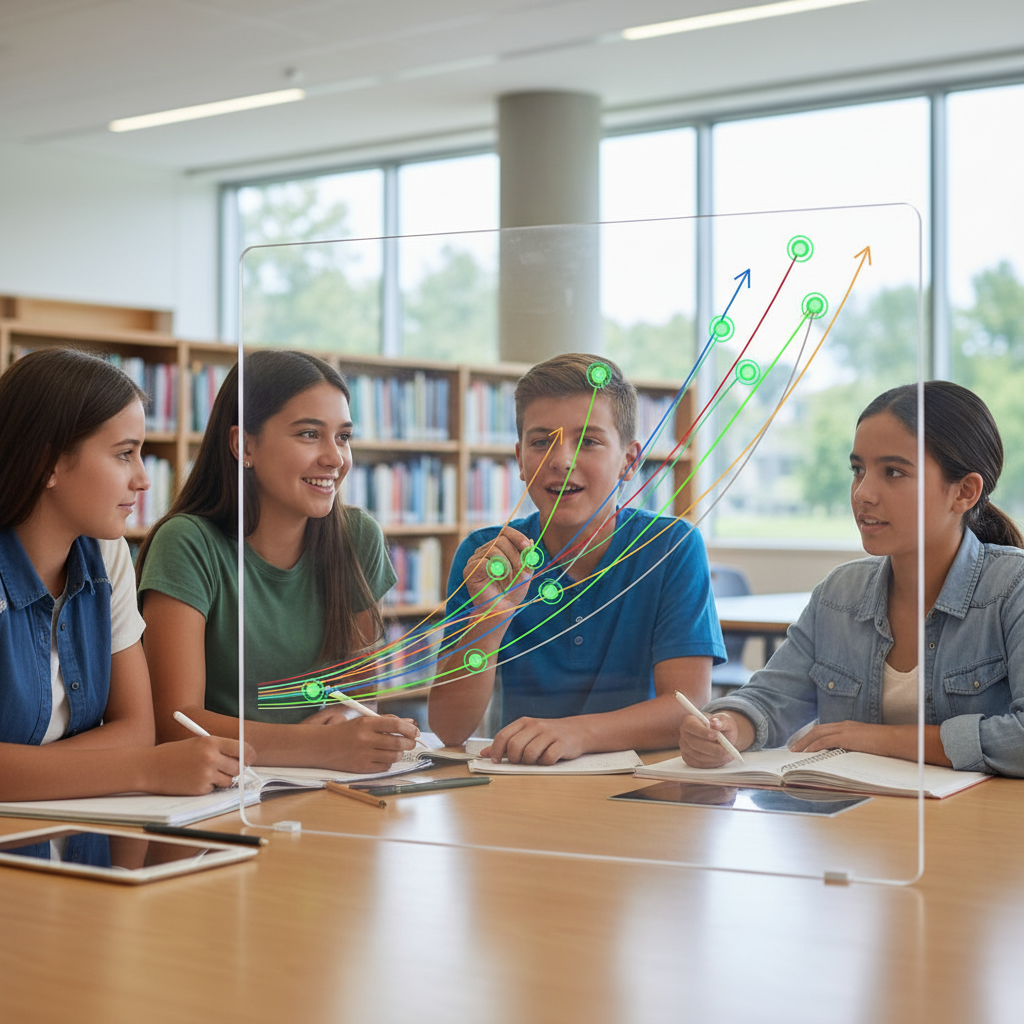
For students receiving intensive intervention, create visual trajectories showing where they are, where they need to be, and whether current growth is on track. When growth falls short of the recovery trajectory, intensify intervention rather than waiting to see if things improve.
Recovery Monitoring Questions
- • Are students receiving intervention growing faster than typical (CGP > 50)?
- • Is observed growth on track for recovery timeline?
- • Are specific skill gaps closing, or just overall scores changing?
- • Are all student groups showing recovery, or are some being left behind?
- • What's the response when intervention isn't producing adequate growth?
Addressing Equity in Recovery
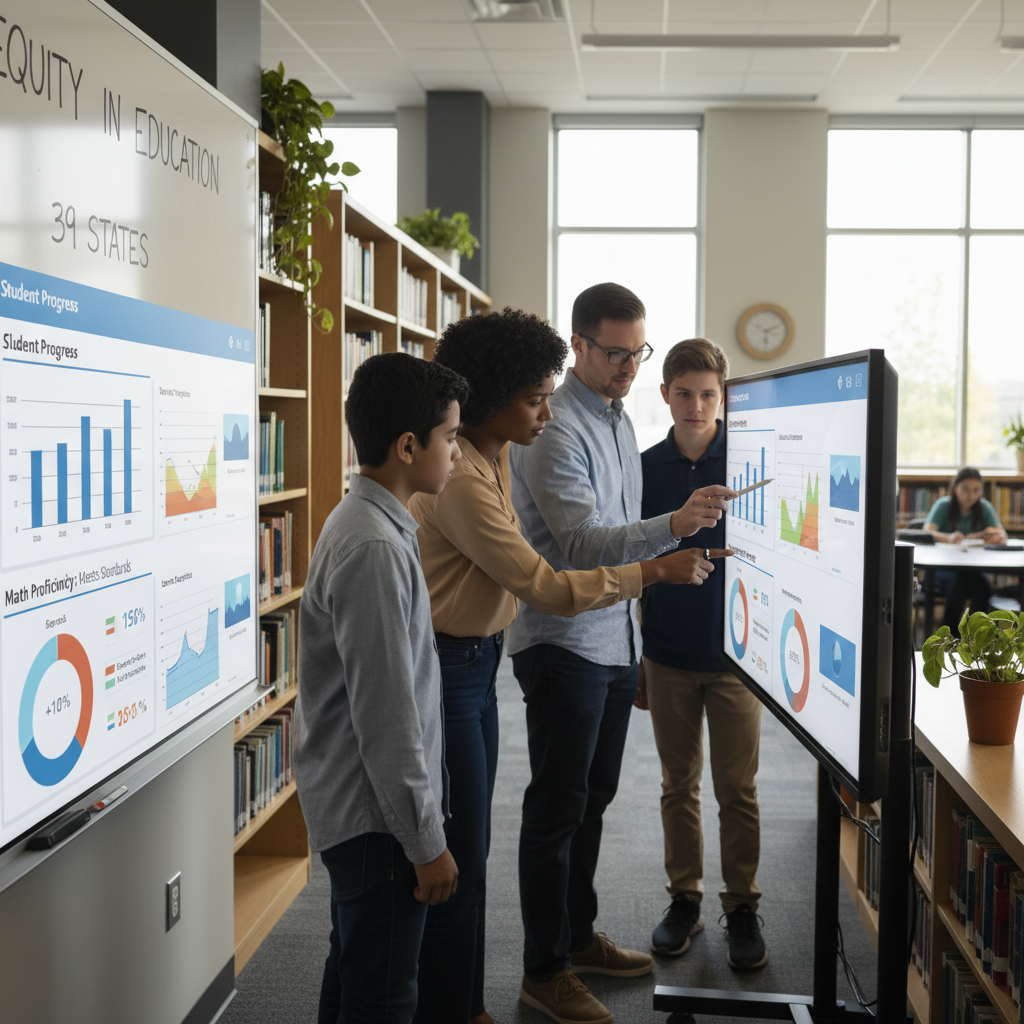
Learning loss was not equitably distributed. Students from low-income families, students of color, and students who already faced opportunity gaps before the pandemic experienced larger losses. Equitable recovery requires directing the most intensive resources toward those who lost the most.
Yet early evidence suggests recovery resources aren't always reaching the students who need them most. Some districts have spread recovery programs broadly rather than targeting highest-need students. Some programs have lower participation rates among the students most affected.
Equitable recovery requires:
Disaggregated monitoring. Track recovery progress by student group. Are low-income students recovering as fast as affluent peers? Are students of color closing gaps or seeing them widen? Aggregated data can hide disparities.
Targeted resource allocation. Direct the most intensive interventions—high-dosage tutoring, extended learning—to students with the largest gaps. Universal programs spread too thin don't produce the concentrated impact needed for recovery.
Barrier removal. Identify and address barriers to participation. If summer learning has low attendance among the highest-need students, understand why and adjust. Transportation, meal provision, family obligations, and program appeal all affect participation.
The Role of Social-Emotional Support
Academic recovery doesn't happen in isolation. Many students returned from the pandemic with increased anxiety, depression, and behavioral challenges. These social-emotional needs can block academic progress if not addressed.
Effective recovery approaches integrate social-emotional support with academic intervention:
Build connection. Students who feel connected to caring adults at school are more likely to engage in learning. Prioritize relationship-building, especially for students who disengaged during remote learning.
Address anxiety. For some students, academic pressure triggers anxiety that undermines performance. Create psychologically safe environments where struggle is normalized and growth is celebrated.
Teach self-regulation. Executive function skills that support learning—focus, persistence, organization—may have atrophied during disrupted schooling. Explicit instruction and practice in these skills supports academic recovery.
Provide targeted mental health support. Students experiencing significant mental health challenges may need professional support beyond what schools typically provide. Partnerships with community mental health providers extend school capacity.
Cohort Analysis
Compare student cohorts over time and identify trends across grade levels and demographics.
Sustaining Recovery Efforts
Recovery isn't a one-year effort. The gaps that opened over two years of disruption will take multiple years to close. Yet ESSER funding that enabled many recovery programs expires, and the urgency that drove initial recovery efforts may fade.
Sustaining recovery requires:
Planning for funding transitions. Identify which recovery programs are most effective and prioritize sustainable funding for those. Wind down lower-impact programs before funding cliffs force abrupt endings.
Building capacity. Recovery programs should build lasting capacity—trained tutors, intervention systems, extended learning infrastructure—not just temporary services.
Maintaining urgency. As pandemic memories fade, the urgency of recovery may diminish. Continue tracking and communicating recovery progress to maintain focus on the students still behind.
Adjusting targets over time. Recovery goals should evolve based on progress. Students who recover quickly can transition to maintenance. Students who remain behind need continued intensive support.
Early Evidence of Progress
Some districts are showing promising early results. Data from schools that implemented intensive recovery strategies show growth rates exceeding pre-pandemic norms—evidence that accelerated recovery is possible with the right approaches and sufficient investment.
Common factors in successful recovery efforts include:
The Stakes
The students who lost the most during the pandemic were often those who already faced the most barriers. If recovery efforts don't reach them, existing inequities will be cemented into place for a generation. The gaps that opened will become the new normal, with lifelong consequences for educational attainment, economic opportunity, and life outcomes.
But this outcome isn't inevitable. We know what produces accelerated growth. We have resources, at least temporarily, to invest in recovery. The question is whether we'll sustain the commitment long enough for recovery to be complete—not just started, not just making progress, but complete.
Every student who enters school behind and exits behind represents a failure to invest what their success required. After the pandemic, more students are behind than before. The choice is whether to accept that as permanent—or to do what it takes to help them catch up.
Key Takeaways
- Students need 4-5 months of additional instruction to fully recover pandemic learning losses—requiring above-typical growth for multiple years.
- High-dosage tutoring has the strongest evidence for producing the accelerated growth recovery requires.
- Equitable recovery requires targeting the most intensive resources to students who lost the most.
- Recovery must be sustained over multiple years, with plans for continuing beyond temporary ESSER funding.
Dr. Sarah Chen
Chief Education Officer
Former school principal with 20 years of experience in K-12 education. Dr. Chen leads AcumenEd's educational research and curriculum alignment initiatives.