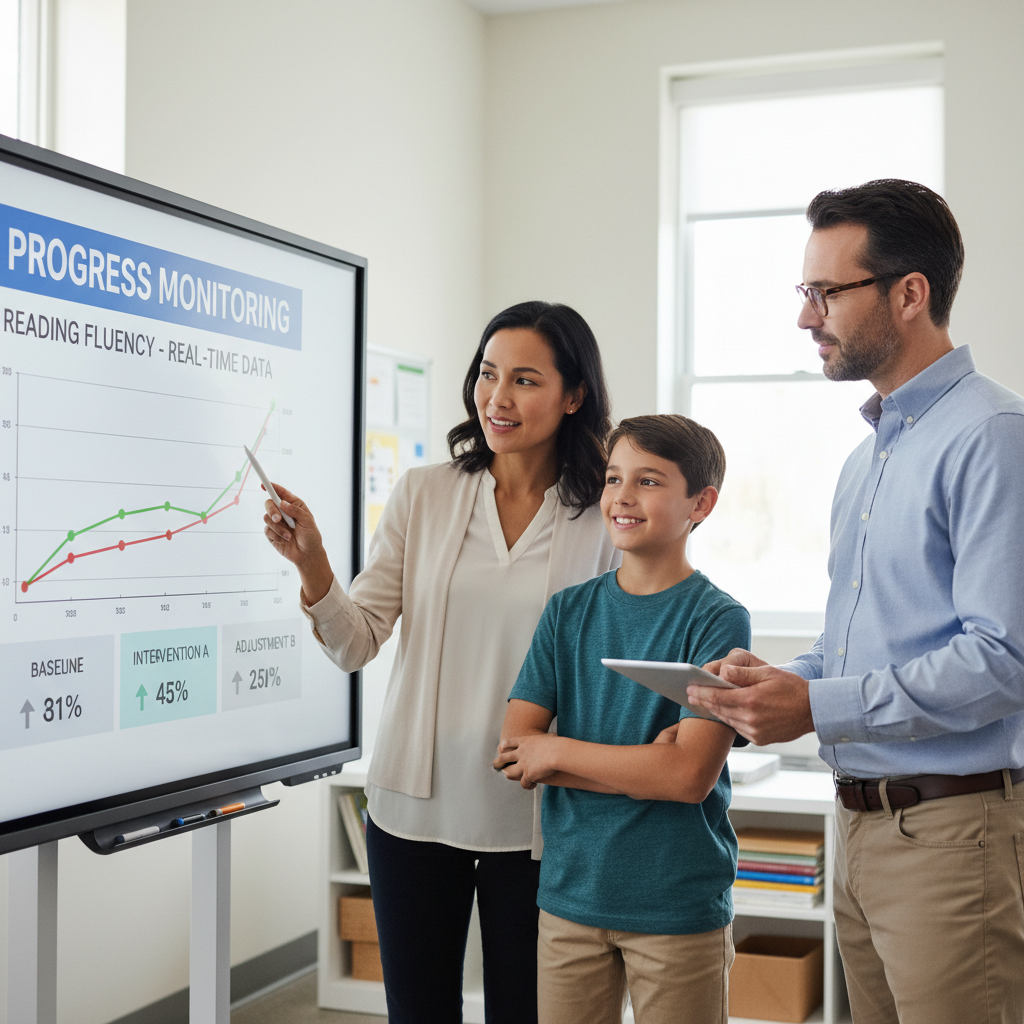
What Is Progress Monitoring
Progress monitoring uses frequent, brief assessments to track student growth toward goals. Unlike summative assessments that evaluate learning after instruction, progress monitoring informs instruction during intervention.
Key Elements
- • Frequency: Weekly or bi-weekly for Tier 2/3 students
- • Sensitivity: Measures must detect small changes
- • Alignment: Measures must match intervention targets
- • Efficiency: Brief assessments that don't consume instruction time
Intervention Planning
Plan, track, and measure the effectiveness of student interventions across all tiers.
Using Progress Monitoring Data
Setting Goals
Establish ambitious but achievable goals based on baseline data and expected growth rates.
Graphing Progress
Visual displays make trends clear. Plot data points against goal lines to see if students are on track.
Decision Rules
Establish rules for when to adjust interventions: How many data points below the goal line before changing? When is an intervention working well enough to reduce intensity?
See AcumenEd in Action
Request a personalized demo and see how AcumenEd can transform your school's data.
Key Takeaways
- Progress monitoring uses frequent, brief assessments to track growth during intervention.
- Key elements: frequency, sensitivity, alignment with targets, efficiency.
- Set goals, graph progress, and use decision rules to adjust interventions.
Marcus Johnson
Director of Data Science
Data scientist specializing in educational analytics with expertise in growth modeling and predictive analytics for student outcomes.