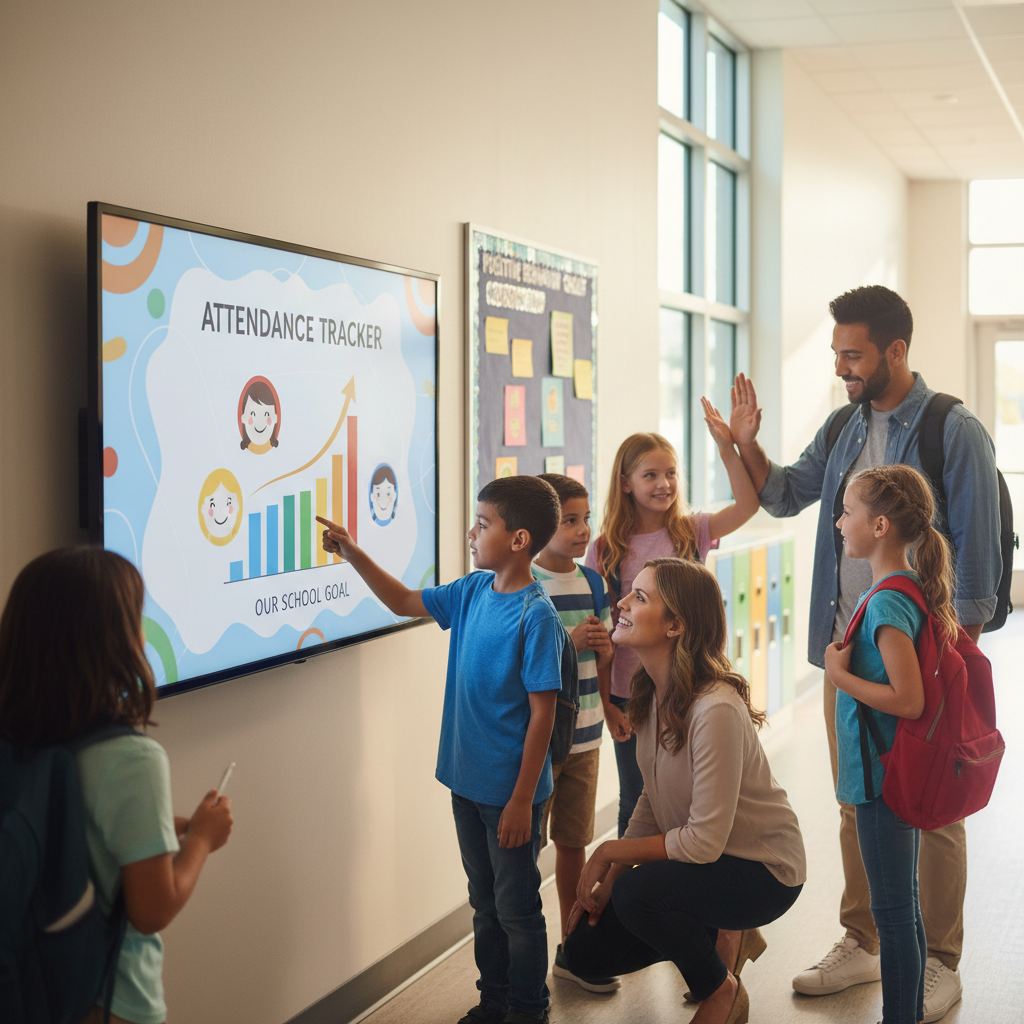
Data-Driven Attendance
The gap between knowing attendance matters and improving attendance often lies in data systems. Schools that can identify at-risk students in real time, track intervention effectiveness, and monitor trends outperform those relying on end-of-year reports and intuition.
The counselor wanted to know which students were approaching chronic absenteeism. The principal wanted to see attendance trends by grade level. The intervention team wanted to track whether their outreach was working. Each request required a manual data pull, taking days. By the time reports were ready, the data was stale.
This school had attendance data—lots of it. What they lacked was an attendance data system: the infrastructure to transform raw data into timely, actionable information. Building that system is foundational to effective attendance improvement.
Components of an Effective System
Accurate Data Collection
Everything starts with accurate data. This requires clear policies for recording attendance, consistent implementation across all classrooms, and quality control to catch and correct errors.
Key elements include:
Clear definitions: What counts as present, absent, tardy? How are partial-day attendance, early dismissals, and excused absences coded?
Consistent procedures: When is attendance taken? By whom? How are corrections handled?
Timely entry: Attendance should be recorded as close to real-time as possible—ideally within the class period, not at day's end.
Error checking: Regular audits catch systematic errors before they corrupt the data.
Centralized Data Storage
Attendance data should flow into a centralized system—typically the Student Information System (SIS)—where it can be analyzed alongside other student data. Siloed data in separate systems or spreadsheets prevents the integrated view needed for effective intervention.
Calculated Metrics
Raw attendance records must be transformed into meaningful metrics:
Essential Attendance Metrics
Absence Rate
Days absent ÷ Days enrolled × 100
Chronic Absenteeism Status
Flag for students with absence rate ≥10%
Projected Year-End Absences
Current absence rate × remaining days (for early warning)
Attendance Trend
Comparison of recent absence rate to earlier period
Days Until Chronic
Number of additional absences that would push student to 10%
Automated Alerts
Systems should automatically identify students crossing risk thresholds and alert appropriate staff. Waiting for manual review introduces delays; automated alerts enable immediate response.
Common alert triggers include:
- • Any absence (for "we missed you" outreach)
- • Second absence in two weeks
- • Projected chronic absenteeism by year-end
- • Crossing the chronic absenteeism threshold
- • Sudden increase in absence rate
Reporting and Visualization
Data must be accessible to those who need it. Dashboards, reports, and visualizations translate data into understandable formats for different audiences: classroom teachers, counselors, administrators, district leaders.
Effective visualizations include:
- • Individual student attendance calendars showing pattern of absences
- • Class/grade/school attendance trend lines
- • Chronic absenteeism rates by student subgroup
- • Geographic maps showing absence hotspots
- • Intervention tracking showing student progress
Attendance Tracking
Monitor chronic absenteeism patterns and intervene before attendance impacts achievement.
Integration with Intervention Systems
Data systems should connect to intervention workflows:
Intervention Tracking
Record what interventions have been attempted for each student: letters sent, calls made, meetings held, resources provided. This prevents duplication, enables continuity across staff changes, and supports intervention fidelity monitoring.
Outcome Monitoring
Track whether attendance improves after intervention. Did the student's absence rate decrease following outreach? If not, escalation may be needed. This feedback loop enables continuous improvement of intervention strategies.
Case Management
For students with complex attendance challenges, systems should support case management: notes on family circumstances, barrier assessments, multi-agency coordination, follow-up task tracking.
Technology Options
Schools have several technology approaches:
SIS-Based Systems
Most Student Information Systems include attendance tracking modules. These have the advantage of integration with other student data but may lack sophisticated analytics and alerting features.
Dedicated Attendance Platforms
Specialized attendance management platforms provide advanced features: predictive analytics, automated messaging, intervention tracking, sophisticated visualization. They typically integrate with the SIS while providing enhanced functionality.
Early Warning Systems
Comprehensive early warning systems incorporate attendance alongside academic and behavioral data, providing holistic student risk identification. Attendance is one component of broader student support infrastructure.
Custom Solutions
Some districts build custom attendance analytics using data warehouses and business intelligence tools. This allows maximum customization but requires significant technical capacity.
System Selection Criteria
- • Integration with existing SIS
- • Real-time data availability
- • Automated alert capabilities
- • User-friendly interface for non-technical staff
- • Mobile accessibility for staff in the field
- • Intervention tracking features
- • Reporting flexibility
- • Cost and sustainability
Data Quality Assurance
Even the best system produces garbage if fed garbage. Data quality requires ongoing attention:
Training
Staff who record attendance must understand how to do so accurately. Initial training should be reinforced with periodic refreshers, especially when policies or systems change.
Monitoring
Regular audits identify data quality issues. Check for classrooms with suspiciously low absence rates (possible under-reporting), inconsistent coding, late data entry, and enrollment date errors.
Correction Procedures
Clear procedures for correcting errors prevent data degradation. Who can make corrections? What documentation is required? How are corrections logged?
Validation Rules
Systems should enforce validation: a student can't be marked present and absent on the same day; attendance can't be recorded for a student not enrolled; certain codes require additional documentation.
Role-Based Access
Different staff need different data access:
Teachers need attendance data for their students—daily patterns, trends, comparison to class average.
Counselors need broader access for caseload management—all students in their caseload, intervention tracking, alert notifications.
Attendance staff need school-wide data—chronic absenteeism lists, trend reports, intervention oversight.
Administrators need aggregate views—school-wide metrics, subgroup comparisons, year-over-year trends.
District leaders need cross-school comparison and aggregate district data.
Privacy and FERPA considerations require restricting access to legitimate educational purposes while ensuring those with intervention responsibilities have the data they need.
See AcumenEd in Action
Request a personalized demo and see how AcumenEd can transform your school's data.
Building Data Culture
Technology alone doesn't create data-driven attendance improvement. Culture matters:
Regular Data Review
Schedule routine attendance data review at multiple levels: weekly by intervention teams, monthly by school leadership, quarterly by district leadership. Consistent review maintains focus and catches emerging problems.
Action Orientation
Data review should lead to action decisions: Which students need intervention? Which interventions aren't working? What resources are needed? Data that doesn't drive action is merely informational.
Continuous Improvement
Use data to evaluate and improve the attendance system itself. Which interventions produce results? Where are data quality issues emerging? What information is missing? The system should improve over time.
From Data to Impact
The ultimate measure of an attendance data system is student outcomes. Does the system help identify students needing support before they become chronically absent? Does it enable effective intervention? Does chronic absenteeism decrease?
Return to the school at the opening. After building their data system—automated daily absence reports, weekly chronic absenteeism updates, real-time dashboards, intervention tracking—the counselor could see at-risk students immediately. The principal could monitor trends as they developed. The intervention team could track what was working. Data became timely and actionable.
And chronic absenteeism dropped. Not because of the data system itself, but because the data system enabled the human work of identifying students, understanding barriers, and providing support. The system was the foundation; the improvement was the result.
Key Takeaways
- Effective attendance systems include accurate collection, calculated metrics, automated alerts, and integrated intervention tracking.
- Data quality requires ongoing attention: training, monitoring, correction procedures, and validation rules.
- Technology options range from SIS-based to dedicated platforms to custom solutions—choose based on integration, features, and capacity.
- Data culture—regular review, action orientation, continuous improvement—matters as much as technology.
James Okonkwo
Senior Implementation Specialist
Former charter school administrator with deep expertise in Michigan charter school accountability and authorizer relations.