The Communication Challenge
Parents receive report cards, assessment results, and progress reports—but research shows many don't understand what the data means for their child. When families don't understand academic information, they can't effectively support learning at home.
Mrs. Rodriguez received her daughter's state test results: "Scale Score: 412. Performance Level: Approaching Expectations." What did 412 mean? Was "approaching" good or bad? Was her daughter on track? The report didn't say. Mrs. Rodriguez wanted to help but didn't know what her daughter needed.
This communication failure is common. Schools generate mountains of data but often communicate it in ways that confuse rather than inform. The result: missed opportunities for family partnership in supporting student learning.
Principles of Effective Communication
Start with "So What?"
Parents don't need to understand the technical details of assessment scoring. They need to know: Is my child on track? What does my child do well? What does my child need to work on? How can I help? Lead with these answers, not with scores.
Use Plain Language
Avoid jargon. "Lexile level" means nothing to most parents; "reading level" is clearer. "Proficient on standard 4.NBT.5" is meaningless; "can multiply large numbers" is understandable. Translate educator-speak into parent-speak.
Provide Context
A score without context is meaningless. What's the benchmark? How does this compare to grade-level expectations? Is this score higher or lower than before? Context transforms a number into useful information.
Include Action Steps
Information without action is frustrating. What should families do with this data? Provide specific, doable suggestions for supporting learning at home. "Practice multiplication facts for 10 minutes daily" is actionable; "support math at home" is vague.
Before and After: Report Card Comments
Before (Confusing):
"Student scored at Level 2 on RI.3.1 and RI.3.2 but Level 3 on RI.3.4. Continue to work on comprehension skills."
After (Clear):
"Maria understands vocabulary well but needs more practice finding key details when reading. You can help by asking 'What happened in this chapter?' after reading together. See attached practice questions."
All AcumenEd Features
Explore our complete suite of data analytics tools designed for Michigan charter schools.
Communicating Different Types of Data
Report Cards
Report cards should clearly communicate: overall performance in each subject, specific strengths and areas for growth, comparison to grade-level expectations, and trends over time. Consider narrative comments that explain what grades mean and suggest next steps.
State Assessment Results
State test reports are often confusing. Help families understand: what the performance levels mean in practical terms, how their child's performance compares to expectations, what the results suggest about strengths and needs, and that one test is just one data point.
Progress Reports
Mid-quarter progress reports should clearly indicate whether students are on track, flag early warning signs, and invite family communication about concerns. These are most valuable when they arrive early enough for course correction.
Benchmark/Interim Assessments
When sharing benchmark results, focus on: progress since last assessment, trajectory toward end-of-year goals, specific skills showing strength or weakness, and school plans for support. Families should understand the purpose—these assessments guide instruction.
Communication Channels
Written Reports
Print or digital reports should be visually clear, with performance levels explained, graphics that aid understanding, and translations available for non-English speakers. Include contact information for questions.
Parent-Teacher Conferences
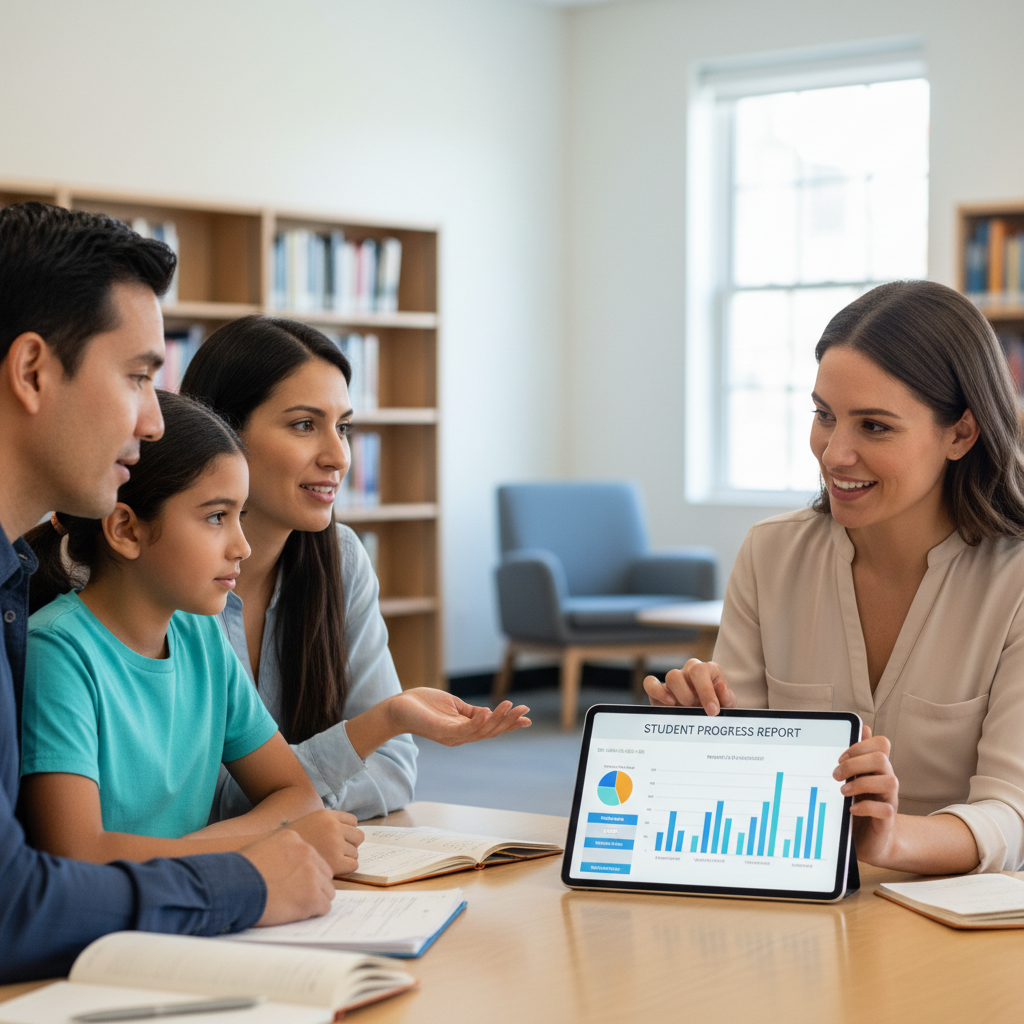
Conferences provide opportunity for dialogue. Come prepared with data to share, but focus on conversation: What questions does the family have? What do they observe at home? What will the partnership look like going forward?
Parent Portals
Online portals can provide real-time access to grades and assignments. But portal data without context can cause anxiety. Help families understand what they're seeing and how to use it constructively.
Data Nights
Host events specifically for explaining assessment data. Walk families through reports, explain what different scores mean, and provide resources for support. These sessions build data literacy across the community.
Addressing Sensitive Situations
When News is Bad
Sharing concerning data requires care. Lead with the relationship and the child's strengths. Present challenges honestly but constructively. Focus on what the school will do and how families can partner. Avoid blame; emphasize teamwork.
When Families Disagree
Some families may reject or dispute assessment results. Listen to understand their perspective. Acknowledge that assessments are imperfect. Focus on multiple data sources. Keep the conversation centered on supporting the child.
When Language is a Barrier
Provide translations of reports and communications. Use interpreters for conferences. Ensure all families have equal access to understanding their child's academic progress, regardless of home language.
When Families Don't Engage
Some families don't respond to communications or attend conferences. Don't assume they don't care. Consider barriers: work schedules, transportation, past negative school experiences, intimidation. Try different approaches: flexible timing, home visits, phone calls, texts.
See AcumenEd in Action
Request a personalized demo and see how AcumenEd can transform your school's data.
Building Data Literacy
Long-term goal: build family capacity to understand and use academic data:
Explain the assessment system. Help families understand what assessments their child takes, why, and what results mean. Demystify the system.
Teach families to ask questions. Empower parents to ask: Is my child on track? What should I look for at home? How can I support this? What if my child is struggling?
Provide resources. Share websites, apps, and materials that help families understand grade-level expectations and support learning at home.
Model data use. Show families how teachers use data to improve instruction. When families see how schools use data constructively, they're more likely to do the same.
Technology and Communication
Technology can enhance family communication:
- • Parent portals provide real-time access to grades and assignments
- • Mobile apps push notifications and enable two-way communication
- • Video messages can explain complex data more personally than text
- • Translation tools help bridge language barriers
- • Data dashboards can visualize student progress over time
But technology is a tool, not a solution. Digital communication should complement, not replace, personal relationship. Some families lack technology access; ensure alternative communication methods.
Mrs. Rodriguez's Better Experience
What if Mrs. Rodriguez's school communicated differently? The state test report might explain: "Maria is approaching grade-level expectations in reading. She does well with vocabulary but needs more practice with comprehension—understanding what she reads. Here's what this means and how you can help..."
The teacher might call to discuss: "Maria's test scores show she's close to grade level but not quite there yet in reading comprehension. Here's what we're doing at school, and here are some things you could try at home. Can we set up a time to talk more?"
With clear communication, Mrs. Rodriguez understands her daughter's strengths and needs. She has specific ways to help. She feels like a partner, not a bystander. That's the power of effective data communication: it enables families to support learning.
Every family wants their child to succeed. When we communicate academic data clearly, we equip families with the information they need to be partners in that success.
Key Takeaways
- Lead with what families need to know: Is my child on track? What are strengths and needs? How can I help?
- Use plain language, provide context, and include specific action steps families can take.
- Use multiple channels—written reports, conferences, portals, events—to reach all families.
- Build family data literacy over time so families can understand and use academic information independently.
Dr. Sarah Chen
Chief Education Officer
Former school principal with 20 years of experience in K-12 education. Dr. Chen leads AcumenEd's educational research and curriculum alignment initiatives.